Rear Loader Garbage Truck
A rear loader garbage truck is a truck that has an opening, called a hopper, at the rear to receive trash. Unlike other types of garbage truck, the loading and compacting mechanism is integrated within the rear tailgate, which all lift up together when the truck unloads at the dumping location.
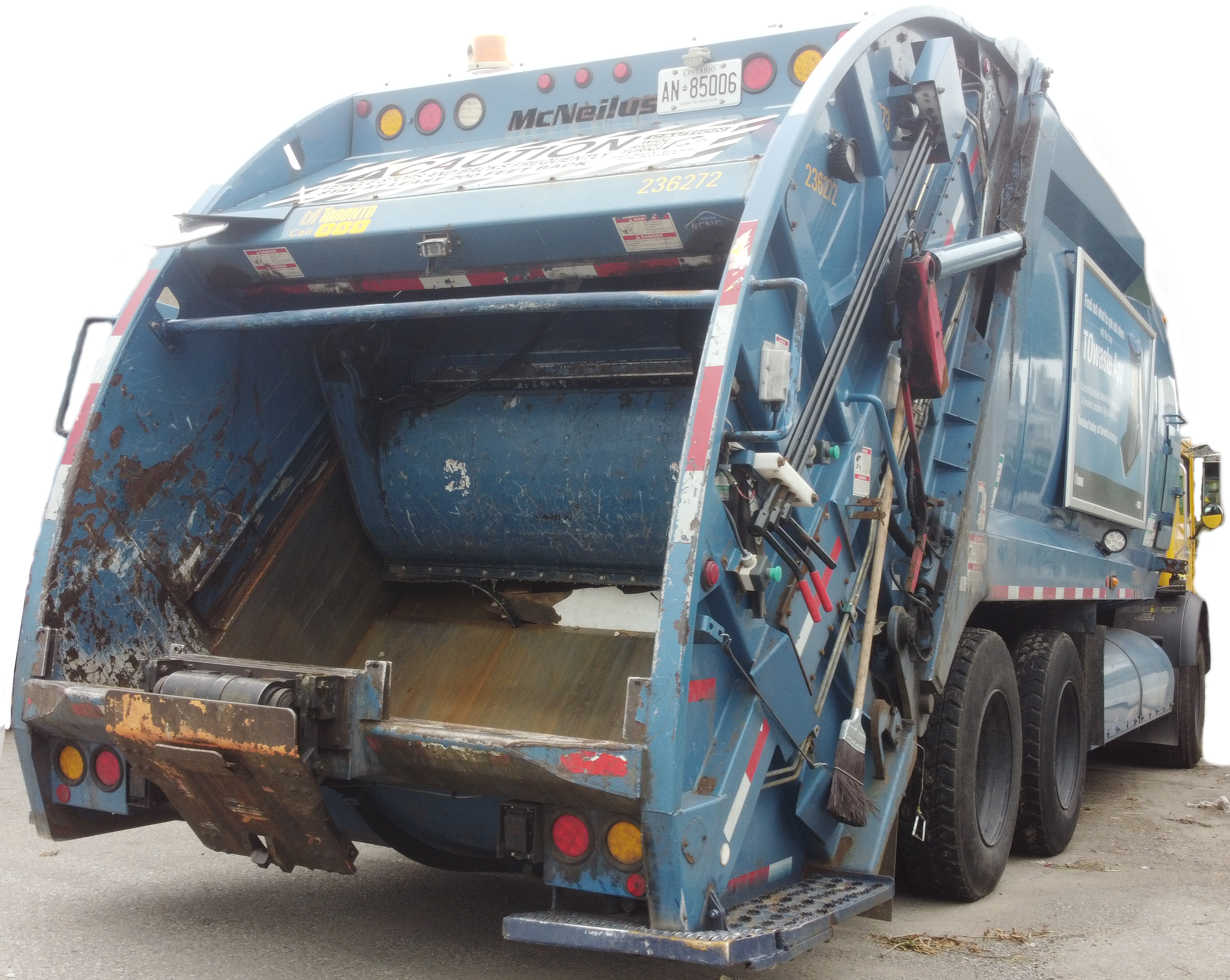
The compactor equipped on rear loader garbage trucks scoop trash out of the hopper and push it into the main storage body of the truck. The truck is also equipped with an ejector to force trash out of the truck when at the landfill, transfer station or dump. This ejector is usually left extended after emptying so that the compactor can press trash against it as it moves trash inside. The edge of the compactor blade is often reinforced to smash large items into smaller pieces.
Rear loader garbage trucks are used to collect household waste, recycling, organic waste, loose bulk waste, small and large containers, commercial waste.
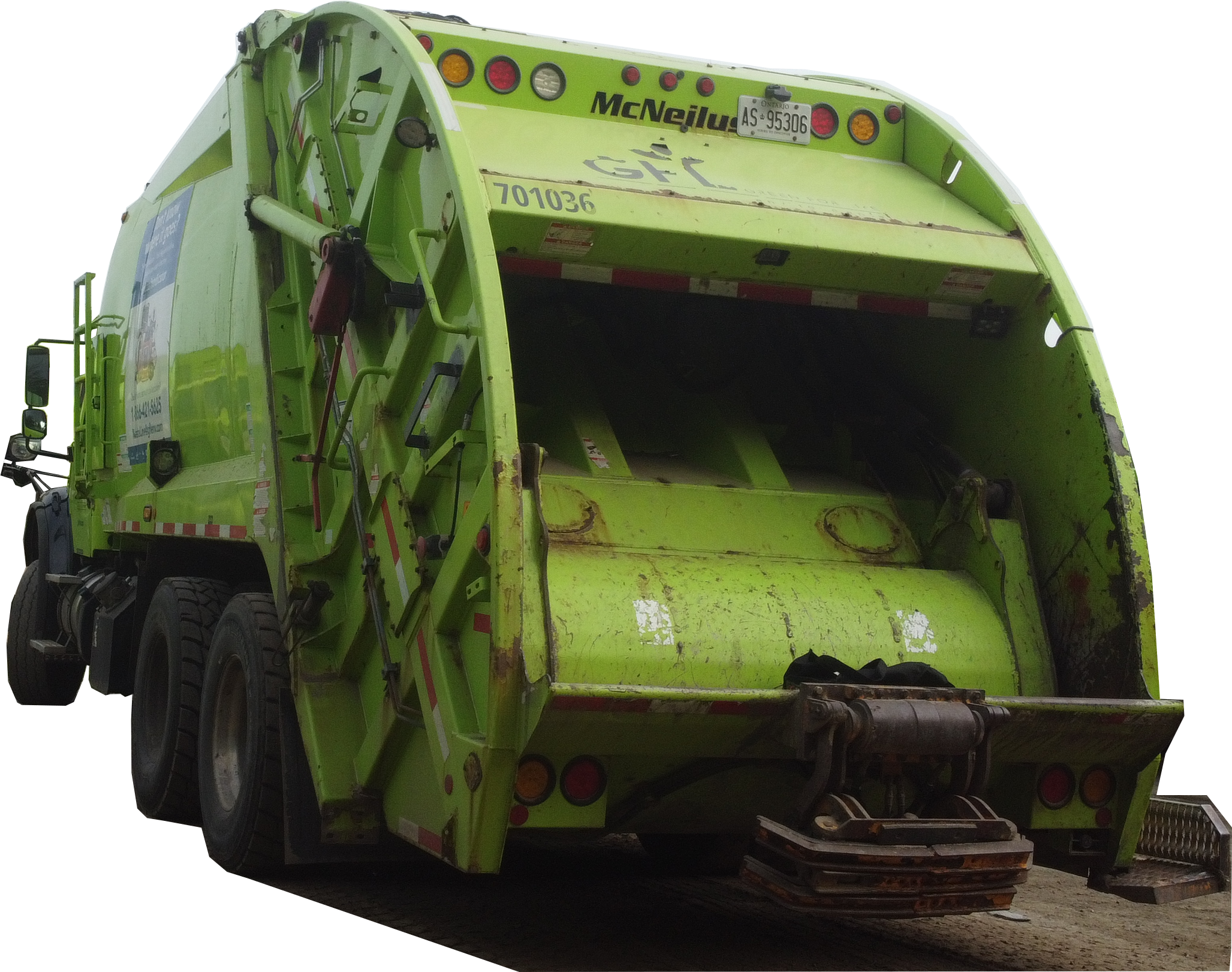
Trash can be dropped directly into the rear loader garbage truck by hand, but many of these trucks have automated tippers that can fit containers on grooves and lift them to empty into the hopper. Another typical attachment is the reeving cylinder or chain, that hooks onto larger containers to lift them up from the end.
The main advantage is that rear loaders are versatile for many applications, can better collect trash through tighter alleyways, and have a low loading sill height compared to other trucks. Their disadvantages is that they typically require multiple crew members. The driver can collect trash on their own but it is much slower and labourious as they would have to go between the cab and the rear of the truck at every collection stop. Another advantage is that rear loader garbage trucks crush trash relatively efficiently compared to other types, as the ejector wall can be set to move back only when the garbage is sufficiently packed, such as when hydraulic cylinder pressure exceeds 15kPa (2200 PSI) for example.
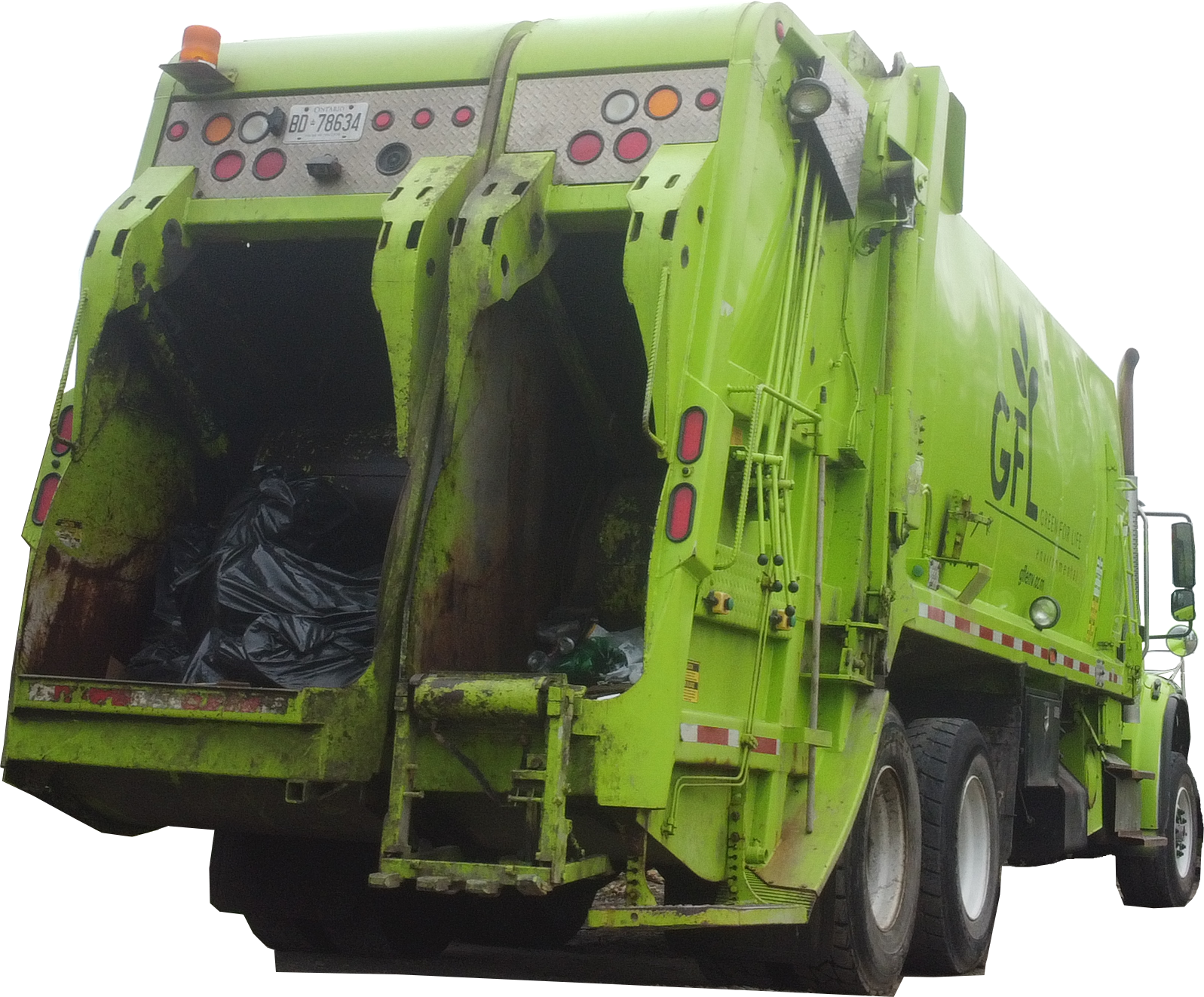
A variant is the split rear-loader which comes with a partitioned body and tailgate. This allows collectors to collect two separate waste streams at once, such as garbage and recycling, recycling and organics, or recycling and bulk waste. The trade off is the reduced capacity, and the smaller hopper size may make it difficult to collect larger waste items.